Kubernetes in Production 2026: From Basics to Enterprise-Grade Clusters
Learn how to deploy, scale, and maintain production-grade Kubernetes clusters. Covers security, observability, cost optimization, and disaster recovery strategies.
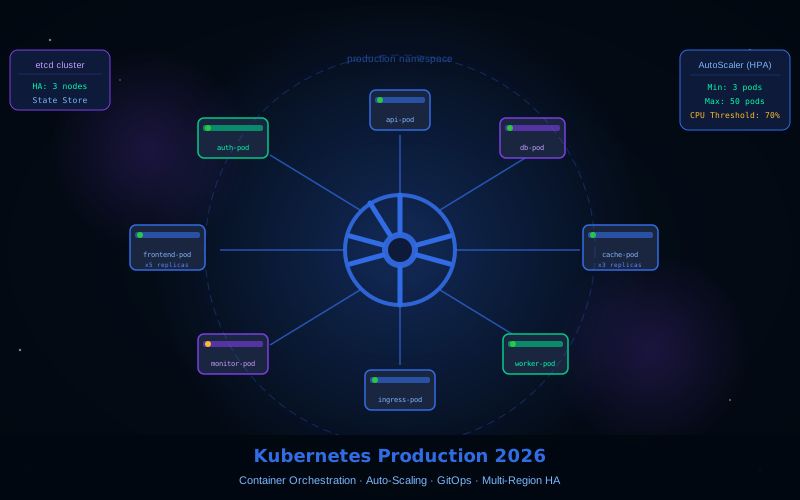
Why Kubernetes Dominates Container Orchestration
Kubernetes has evolved from a complex orchestration tool to the de facto standard for cloud-native applications. In 2026, 87% of enterprises run production workloads on Kubernetes.
Core Kubernetes Concepts Explained
Pods: The smallest deployable units containing one or more containers
Deployments: Declarative updates for Pods and ReplicaSets
Services: Stable network endpoints for accessing Pods
Ingress: HTTP/HTTPS routing to Services
ConfigMaps & Secrets: Configuration and sensitive data management
Production Architecture Patterns
Multi-Region Deployment:
- Active-active configuration for high availability
- Cross-region service mesh (Istio, Linkerd)
- Global load balancing with GeoDNS
- Data replication strategies
Cluster Topology:
# Production-grade cluster architecture
Control Plane:
  - 3 master nodes (HA configuration)
  - etcd cluster (distributed key-value store)
  - API server with load balancer

Worker Nodes:
  - Application pods (node pools)
  - System pods (monitoring, logging)
  - Autoscaling groups (5-50 nodes)
Security Best Practices
Network Policies:
apiVersion: networking.k8s.io/v1
kind: NetworkPolicy
metadata:
  name: api-allow
spec:
  podSelector:
    matchLabels:
      app: api
  policyTypes:
    - Ingress
  ingress:
    - from:
      - podSelector:
          matchLabels:
            app: frontend
      ports:
        - protocol: TCP
          port: 8080
Pod Security Standards:
- Privileged: Unrestricted (avoid in production)
- Baseline: Minimally restrictive (prevents known escalations)
- Restricted: Heavily restricted (production recommended)
Observability Stack
Monitoring with Prometheus + Grafana:
- Cluster health metrics (CPU, memory, disk)
- Application performance metrics
- Custom business metrics
- AlertManager for intelligent alerting
Logging with ELK/EFK Stack:
- Elasticsearch for log storage and search
- Fluentd/Fluent Bit for log aggregation
- Kibana for visualization and analysis
- Centralized logging across all pods
Distributed Tracing with Jaeger:
- Request flow visualization
- Performance bottleneck identification
- Service dependency mapping
- OpenTelemetry integration
Autoscaling Strategies
Horizontal Pod Autoscaler (HPA):
apiVersion: autoscaling/v2
kind: HorizontalPodAutoscaler
metadata:
  name: api-hpa
spec:
  scaleTargetRef:
    apiVersion: apps/v1
    kind: Deployment
    name: api
  minReplicas: 3
  maxReplicas: 50
  metrics:
    - type: Resource
      resource:
        name: cpu
        target:
          type: Utilization
          averageUtilization: 70
Cluster Autoscaler:
- Automatically adds nodes when pods are pending
- Removes underutilized nodes to save costs
- Works with cloud provider node groups
Cost Optimization Techniques
- Right-sizing: Use VPA (Vertical Pod Autoscaler) to optimize resource requests
- Spot Instances: Run non-critical workloads on spot/preemptible nodes (60-80% savings)
- Resource Quotas: Prevent resource waste with namespace limits
- Cluster Consolidation: Use multi-tenancy with proper isolation
Disaster Recovery and Backup
Velero for Cluster Backups:
- Automated daily backups of cluster resources
- Application-consistent snapshots
- Cross-region backup storage
- Disaster recovery automation
GitOps with ArgoCD/Flux
Declare infrastructure and applications in Git:
- Single Source of Truth: Git as the desired state
- Automated Sync: Continuous reconciliation
- Rollback Capability: Git revert for instant rollbacks
- Audit Trail: Complete change history
DevFamz's Kubernetes Expertise
We manage 100+ production Kubernetes clusters for clients worldwide:
- End-to-end cluster setup and migration
- 24/7 monitoring and incident response
- Cost optimization (average 40% reduction)
- Security audits and compliance (SOC 2, HIPAA)
- Developer training and documentation
Conclusion
Kubernetes is powerful but complex. Success in production requires expertise in architecture, security, observability, and operations. Partner with DevFamz to leverage Kubernetes without the operational burden.
Tags
DevFamz DevOps Team
Expert team at DevFamz specializing in devops & cloud. We bring years of production experience and cutting-edge technical expertise to every project.
Related Articles
The Future of AI Development in 2026: Beyond LLMs and Into Agentic Systems
Discover how AI development is evolving beyond simple chatbots into autonomous agentic systems that can plan, execute, and iterate. Learn about the latest trends in multi-modal AI, reasoning engines, and production-ready AI architectures.
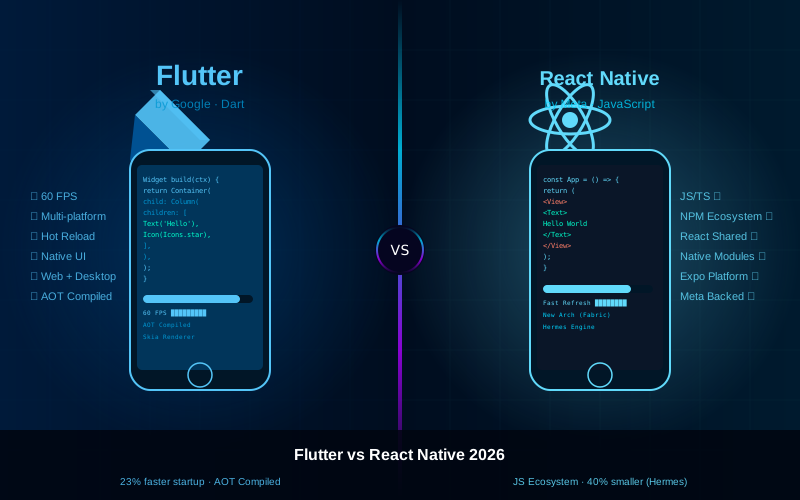
Flutter vs React Native in 2026: The Definitive Performance Comparison
An in-depth analysis of Flutter and React Native in 2026, covering performance benchmarks, developer experience, ecosystem maturity, and real-world production use cases.
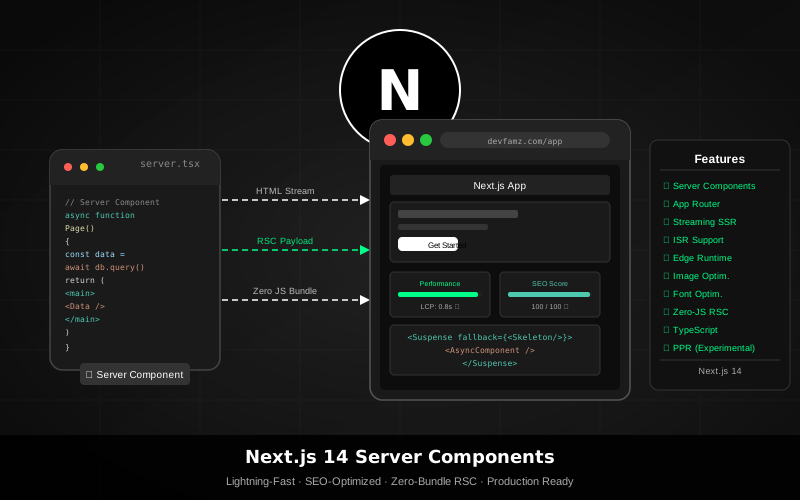
Next.js 14 Server Components: Building Lightning-Fast Web Applications
Master Next.js 14 Server Components and App Router for building ultra-fast, SEO-optimized web applications. Learn streaming, partial prerendering, and production best practices.
Ready to Build Your Next Project?
Let's discuss how DevFamz can help you leverage devops & cloud technologies to build exceptional digital products.
Start Your Project