Next.js 14 Server Components: Building Lightning-Fast Web Applications
Master Next.js 14 Server Components and App Router for building ultra-fast, SEO-optimized web applications. Learn streaming, partial prerendering, and production best practices.
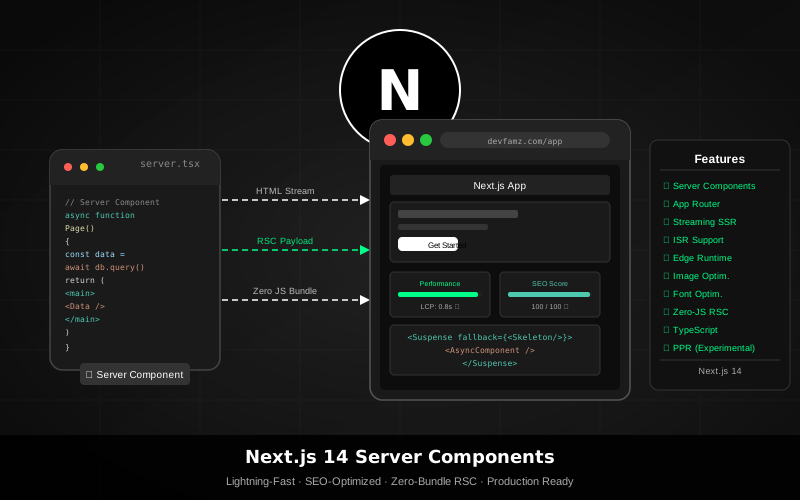
The React Server Components Revolution
Next.js 14 introduces a paradigm shift in how we build web applications. Server Components enable zero-bundle JavaScript rendering, dramatically improving performance and user experience.
Understanding Server Components vs Client Components
Server Components (Default):
- Render on the server, send HTML to client
- Zero JavaScript bundle impact
- Direct database and backend access
- Automatic code splitting
- Cannot use React hooks or browser APIs
Client Components ('use client'):
- Hydrated on client for interactivity
- Can use hooks (useState, useEffect, etc.)
- Access to browser APIs and event handlers
- Smaller, focused components for interactive parts
The App Router Architecture
Next.js 14's file-based routing system offers unprecedented flexibility:
app/
├── layout.tsx          # Root layout (Server Component)
├── page.tsx           # Home page
├── dashboard/
│   ├── layout.tsx     # Nested layout
│   ├── page.tsx       # Dashboard home
│   ├── loading.tsx    # Loading UI
│   ├── error.tsx      # Error boundary
│   └── analytics/
│       └── page.tsx   # /dashboard/analytics
└── api/
    └── users/
        └── route.tsx  # API route handler
Streaming and Suspense for Better UX
Progressive rendering allows showing content as it becomes available:
import { Suspense } from 'react';
import { Skeleton } from '@/components/ui/skeleton';

export default function Dashboard() {
  return (
    <div>
      <h1>Dashboard</h1>
      <Suspense fallback={<Skeleton />}>
        <Analytics /> {/* Async Server Component */}
      </Suspense>
      <Suspense fallback={<Skeleton />}>
        <RecentActivity />
      </Suspense>
    </div>
  );
}
Data Fetching Best Practices
Server Components enable elegant data fetching patterns:
- Server-Side Only: Direct database queries without API layers
- Parallel Requests: Fetch multiple data sources simultaneously
- Request Deduplication: Automatic caching of identical requests
- Streaming Data: Send partial results as they resolve
// Server Component - Direct DB access
async function UserProfile({ id }) {
  const user = await db.user.findUnique({ where: { id } });
  const posts = await db.post.findMany({ where: { authorId: id } });

  return (
    <div>
      <h2>{user.name}</h2>
      <PostList posts={posts} />
    </div>
  );
}
Partial Prerendering (Experimental)
Next.js 14's most exciting feature: combine static and dynamic rendering in a single page:
- Static shell renders instantly from CDN
- Dynamic content streams in progressively
- Best of both static and SSR worlds
Performance Optimization Techniques
Image Optimization:
import Image from 'next/image';

<Image
  src="/hero.jpg"
  alt="Hero"
  width={1200}
  height={600}
  priority // Above fold
  placeholder="blur"
  blurDataURL="data:image/..."
/>
Font Optimization:
import { Inter } from 'next/font/google';

const inter = Inter({
  subsets: ['latin'],
  display: 'swap', // Prevent layout shift
});

export default function RootLayout({ children }) {
  return <html className={inter.className}>...</html>;
}
SEO and Metadata
Dynamic metadata generation for perfect SEO:
export async function generateMetadata({ params }) {
  const product = await getProduct(params.id);

  return {
    title: product.name,
    description: product.description,
    openGraph: {
      images: [product.image],
    },
  };
}
Production Deployment Best Practices
- Vercel Edge Network: Deploy to 100+ global edge locations
- Incremental Static Regeneration: Update static pages without rebuild
- Image CDN: Automatic optimization and delivery
- Analytics: Web Vitals monitoring and performance insights
DevFamz's Next.js Development Process
We've built 200+ production Next.js applications for enterprises and startups:
- Performance-first architecture design
- Component libraries with shadcn/ui and Tailwind
- Type-safe development with TypeScript
- Comprehensive testing (Vitest, Playwright)
- CI/CD pipelines for instant deployment
Conclusion
Next.js 14 represents the future of web development: fast, SEO-friendly, and developer-friendly. Server Components unlock new possibilities for building scalable applications with exceptional user experience.
Tags
DevFamz Web Team
Expert team at DevFamz specializing in web development. We bring years of production experience and cutting-edge technical expertise to every project.
Related Articles
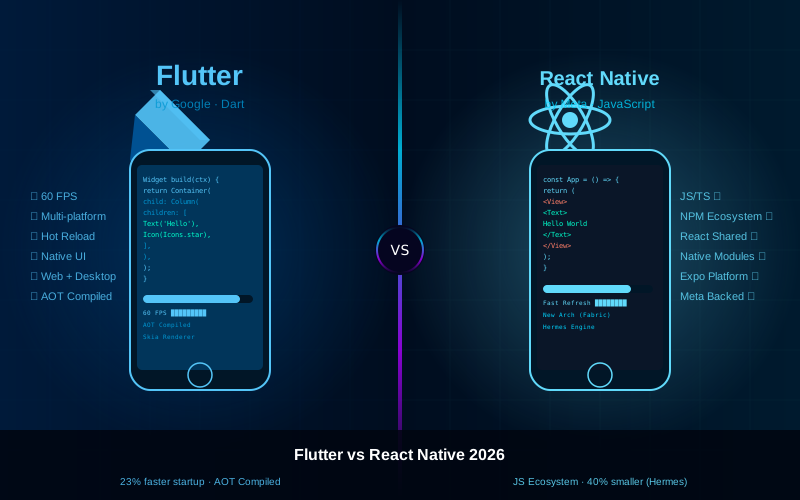
Flutter vs React Native in 2026: The Definitive Performance Comparison
An in-depth analysis of Flutter and React Native in 2026, covering performance benchmarks, developer experience, ecosystem maturity, and real-world production use cases.

The Future of AI Development in 2026: Beyond LLMs and Into Agentic Systems
Discover how AI development is evolving beyond simple chatbots into autonomous agentic systems that can plan, execute, and iterate. Learn about the latest trends in multi-modal AI, reasoning engines, and production-ready AI architectures.
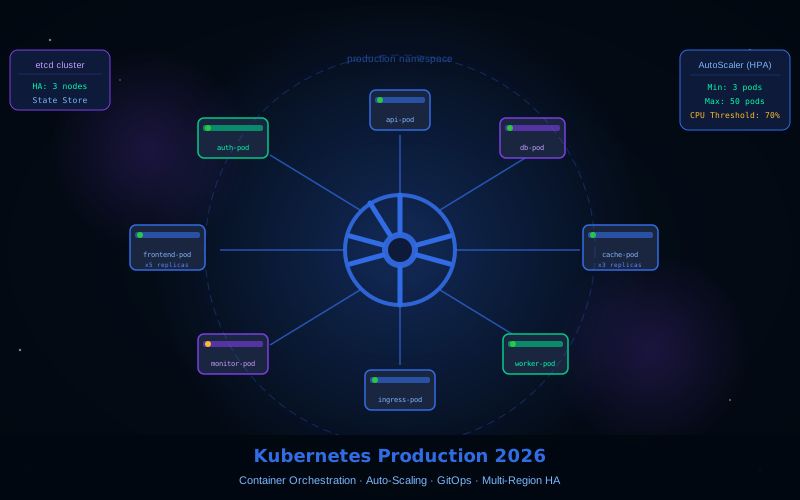
Kubernetes in Production 2026: From Basics to Enterprise-Grade Clusters
Learn how to deploy, scale, and maintain production-grade Kubernetes clusters. Covers security, observability, cost optimization, and disaster recovery strategies.
Ready to Build Your Next Project?
Let's discuss how DevFamz can help you leverage web development technologies to build exceptional digital products.
Start Your Project